|
||||||||||||||||
|
|
|
|
|
|
|
|
|
|
|
|
|
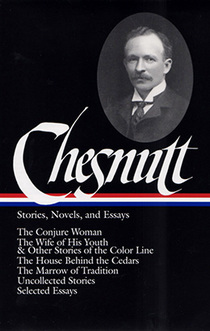
Charles W. ChesnuttStories, Novels, and EssaysThe Conjure Woman • The Wife of His Youth & Other Stories of the Color Line • The House Behind the Cedars • The Marrow of Tradition • uncollected stories • selected essays
"To read this new edition of Chesnutt's work is to see him not only as the first major black American novelist, and not only as a master of the short story, but also as the preeminent literary voice of what still remainsor is once again, a century latera powerful cultural ethos."
Commentary Before Langston Hughes and Zora Neale Hurston, before James Weldon Johnson and James Baldwin, Charles W. Chesnutt broke new ground in American literature with his innovative exploration of racial identity and his use of African American speech and folklore. Rejecting his era's genteel hypocrisy about miscegenation, lynching, and "passing," Chesnutt laid bare the deep contradictions at the heart of American attitudes toward race and history, and in the process created the modern African American novel. The Library of America presents the best of Chesnutt's fiction and nonfiction in the largest and most comprehensive edition ever published, featuring a newly researched chronology of the writer's life. The Conjure Woman (1899) introduced Chesnutt to the public as a writer of "conjure" tales that explore black folklore and supernaturalism. In such stories as "The Goophered Grapevine" and "The Conjurer's Revenge," the storyteller Uncle Julius reveals a world of fantastic powers and occult influence. That same year, Chesnutt published The Wife of His Youth, and Other Stories of the Color Line, a collection set in his native North Carolina that examines the legacies of slavery and Reconstruction at the turn of the century. His first novel, The House Behind the Cedars (1900) dramatizes the emotional turmoil and inevitable conflicts brought on racial passing. Through the agonizing fate of Rena Walden, a beautiful woman in search of her own identity, Chesnutt exposes the destructive consequences of the legal and social fictions surrounding race in the post-bellum South. The Marrow of Tradition (1901), Chesnutt's masterpiece, is a powerful and bitter novel about the harsh reassertion of white dominance in a Southern town. Based on the 1898 massacre in Wilmington, North Carolina, the book reveals the political underpinnings of the emerging segregationist status quo through the story of two secretly related families, one black, one white. Neglected in its own time, The Marrow of Tradition has been recognized increasingly as a unique and multilayered depiction of the hidden dynamics of a society giving way to violence. Nine uncollected short stories, including all the Uncle Julius tales omitted from The Conjure Woman, round out the volume's fiction. A selection of essays, mixing forceful legal argument and political passion, highlight Chesnutt's prescient views on the paradoxes and future prospects of race relations in American and the definition of race itself. Also included is the revealing autobiographical essay written late in his life, "Post-BellumPre-Harlem." Werner Sollors teaches Afro-American Studies and English at Harvard University. His most recent book is Neither Black Nor White Yet Both: Thematic Explorations of Interracial Literature.
Also of interest:
Visit the special LOA Web site on the life and work of Charles W. Chesnutt
Copyright 1995–2007 Literary Classics of the United States, Inc. |
|
List price: $35.00
Web store price: $17.50
Free shipping in the U.S.
Phone orders: 1-800-964-5778
Request product #201360
Subscription Account Holders: Buy the cream-slipcased edition at the
Customer Service Center.
ISBN: 978-1-93108206-8
939 pages |