|
||||||||||||||||
|
|
|
|
|
|
|
|
|
|
|
|
|
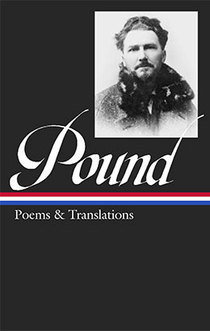
Ezra PoundPoems and Translations
"Richard Sieburth's huge edition of Pound's Poems and Translations for The Library of America devotes many pages to the young man 'out of key with his time.' ... The first edition of Pound's work with any claim to completeness.... to lovers of Pound's work, Poems and Translations could not be more welcome."
TLS This Library of America volume is the most comprehensive collection of Pound's poetry (excepting his long poem The Cantos) and translations ever assembled. Ranging from the text of the handmade first collection Hilda's Book (a gift to the poet H.D.) to his late translations of Horace, and containing dozens of items previously unavailable, Poems and Translations reveals the diversity and richness of a body of work marked by daring invention and resonant music. American literature's modernist revolution is inconceivable without the catalyzing presence of Ezra Pound. With his advocacy of Imagism and Vorticism, his encouragement of writers such as T. S. Eliot, James Joyce, H.D., and William Carlos Williams, his transformations of older literatures (from Japanese Noh plays and the Anglo-Saxon lament "The Seafarer" to the poetry of Guido Cavalcanti and Arnaut Daniel), Pound was in the swirling center of poetic change. In such early volumes as Ripostes, Cathay, Lustra, and Hugh Selwyn Mauberleyas surely as in his later magisterial versions of The Confucian Odes and the Sophoclean dramas Women of Trachis and ElektraPound followed his own directive to "make it new," opening fresh formal pathways while exploring the most ancient traditions. Before, during, and after the controversies and catastrophes of his public career (culminating in his long residence in a Washington mental hospital while under indictment for treason), Pound remained capable of rare technical brilliance and indelible lyricism. Here are the lush early lyrics, echoing Browning and the Troubadours; the chiseled free verse of such masterpieces as "The Return," "Near Perigord," and "Homage to Sextus Propertius"; the dazzling translations that led Eliot to call Pound "the inventor of Chinese poetry for our time." The Chinese verse translations are supplemented by Pound's versions of the Confucian prose textsThe Analects, The Great Digest, and The Unwobbling Pivotwhich he saw as crucial to his literary aims. An extensive chronology offers guidance to Pound's tumultuous life, and detailed notes clarify the many recondite allusions.
Richard Sieburth, editor, is professor of French and Comparative Literature at New York University and the author of Instigations: Ezra Pound and Rýmy de Gourmont and editor of Pound's A Walking Tour in Southern France.
Also of interest:
Copyright 1995–2007 Literary Classics of the United States, Inc. |
|
List price: $45.00
Web store price: $31.50
Free shipping in the U.S.
Phone orders: 1-800-964-5778
Request product #201527
Subscription Account Holders: Buy the cream-slipcased edition at the
Customer Service Center.
ISBN: 978-1-93108241-9
1363 pages |